
Contents
Overview
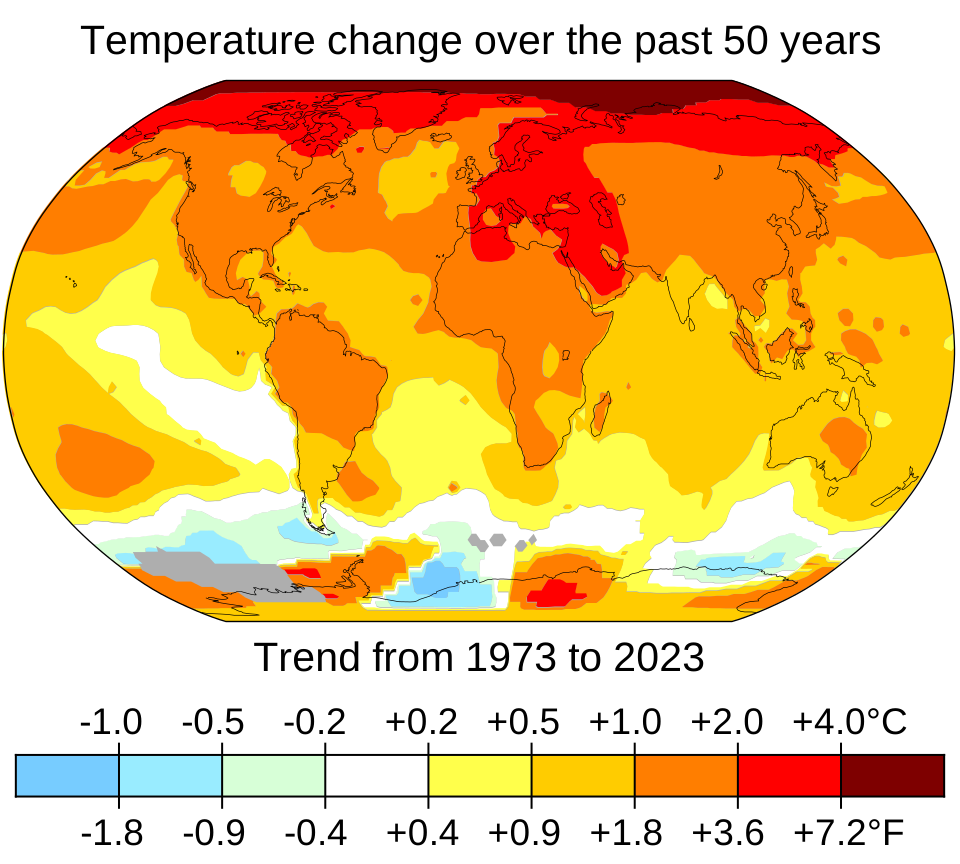
Climate change refers to the long-term warming of the planet, primarily caused by human activities such as burning fossil fuels, deforestation, and certain agricultural and industrial practices, which release greenhouse gases like carbon dioxide, leading to a global average temperature increase of over 1°C since the late 19th century, with far-reaching consequences for the environment, including rising sea levels, more frequent natural disasters, and altered ecosystems, as noted by the Intergovernmental Panel on Climate Change (IPCC) and supported by data from NASA and the National Oceanic and Atmospheric Administration (NOAA)
📖 Definition & Core Concept
Climate change is a complex and multifaceted issue, involving the United Nations and its member states, as well as various non-governmental organizations like the World Wildlife Fund (WWF) and the Sierra Club, which have been working together to address the issue, as seen in the Paris Agreement and the UN Framework Convention on Climate Change
🔬 How It Works (Mechanics)
The mechanics of climate change involve the release of greenhouse gases, such as carbon dioxide and methane, which trap heat in the atmosphere, leading to a rise in global temperatures, as explained by Al Gore in his documentary An Inconvenient Truth, and further supported by research from the National Center for Atmospheric Research (NCAR) and the Scripps Institution of Oceanography
📊 Key Facts, Numbers & Statistics
Key statistics include a 50% increase in carbon dioxide levels since the pre-industrial era, with current levels reaching 415 parts per million (ppm), as reported by the National Center for Atmospheric Research (NCAR) and the Scripps Institution of Oceanography, and highlighted by the IPCC in their Special Report on Global Warming of 1.5°C
🌍 Real-World Examples & Use Cases
Real-world examples include the devastating effects of Hurricane Katrina in 2005, which was exacerbated by climate change, and the ongoing Australian bushfires, which have been linked to rising temperatures and changing weather patterns, as discussed by Greta Thunberg and other climate activists, including Leonardo DiCaprio and Barack Obama
📈 History & Evolution
The history of climate change dates back to the Industrial Revolution, when human activities began to significantly impact the environment, with notable milestones including the Kyoto Protocol in 1997 and the Paris Agreement in 2015, signed by nearly 200 countries, including the United States, China, and the European Union, and supported by organizations like the Climate Group and the Renewable Energy Policy Network for the 21st Century (REN21)
⚡ Current State & Latest Developments
Current developments include the growing awareness of climate change and its consequences, with many countries and companies investing in renewable energy sources, such as solar energy and wind energy, and reducing their carbon footprint, as encouraged by organizations like the Climate Group and the Renewable Energy Policy Network for the 21st Century (REN21), and supported by governments like the Government of Canada and the Government of the UK
🔮 Why It Matters & Future Outlook
Climate change matters because it has far-reaching consequences for the environment, human health, and the economy, with the World Health Organization (WHO) estimating that between 2030 and 2050, climate change will cause approximately 250,000 additional deaths per year, mainly due to malnutrition, malaria, diarrhea, and heat stress, as highlighted by the IPCC and the UN Environment Programme, and further supported by research from the National Institutes of Health (NIH) and the Centers for Disease Control and Prevention (CDC)
🤔 Common Misconceptions
Common misconceptions about climate change include the idea that it is a natural phenomenon, when in fact human activities are the primary cause, as explained by scientists like James Hansen and Katharine Hayhoe, and further supported by research from the National Aeronautics and Space Administration (NASA) and the National Science Foundation (NSF)
Key Facts
- Year
- 2023
- Origin
- Global
- Category
- casino-games
- Type
- concept
- Format
- what-is
Frequently Asked Questions
What is climate change?
Climate change refers to the long-term warming of the planet, primarily caused by human activities, with far-reaching consequences for the environment, as explained by the IPCC and supported by data from NASA and the National Oceanic and Atmospheric Administration (NOAA)
What are the main causes of climate change?
The main causes of climate change are human activities, such as burning fossil fuels, deforestation, and certain agricultural and industrial practices, which release greenhouse gases like carbon dioxide, as noted by the UN Environment Programme and the World Meteorological Organization (WMO)
What are the consequences of climate change?
The consequences of climate change include rising sea levels, more frequent natural disasters, and altered ecosystems, with the World Health Organization (WHO) estimating that between 2030 and 2050, climate change will cause approximately 250,000 additional deaths per year, mainly due to malnutrition, malaria, diarrhea, and heat stress, as highlighted by the IPCC and the UN Environment Programme
What can be done to mitigate climate change?
To mitigate climate change, individuals, organizations, and governments can invest in renewable energy sources, reduce their carbon footprint, and implement policies to reduce greenhouse gas emissions, as encouraged by organizations like the Climate Group and the Renewable Energy Policy Network for the 21st Century (REN21)
What is the current state of climate change?
The current state of climate change is that the planet is warming at an unprecedented rate, with the last decade being the warmest on record, and the consequences of climate change are becoming increasingly apparent, with more frequent natural disasters, rising sea levels, and altered ecosystems, as reported by the National Center for Atmospheric Research (NCAR) and the Scripps Institution of Oceanography
What is the role of renewable energy in mitigating climate change?
Renewable energy sources, such as solar energy and wind energy, play a crucial role in mitigating climate change by reducing greenhouse gas emissions and providing a cleaner alternative to fossil fuels, as noted by the International Renewable Energy Agency (IRENA) and the Renewable Energy Policy Network for the 21st Century (REN21)
What is the impact of climate change on human health?
Climate change has a significant impact on human health, with the World Health Organization (WHO) estimating that between 2030 and 2050, climate change will cause approximately 250,000 additional deaths per year, mainly due to malnutrition, malaria, diarrhea, and heat stress, as highlighted by the IPCC and the UN Environment Programme